A kitchen chopper knife is a versatile, broad-bladed tool primarily designed for precision slicing, dicing, and mincing vegetables, fruits, and boneless meats, distinguishing it from a heavier cleaver used for bones. It typically features a thinner blade, often 2 to 3 millimeters thick, allowing for agile movements and efficient daily kitchen tasks. This knife is an indispensable workhorse for achieving culinary excellence, making quick work of large piles of vegetables and handling boneless proteins with ease.
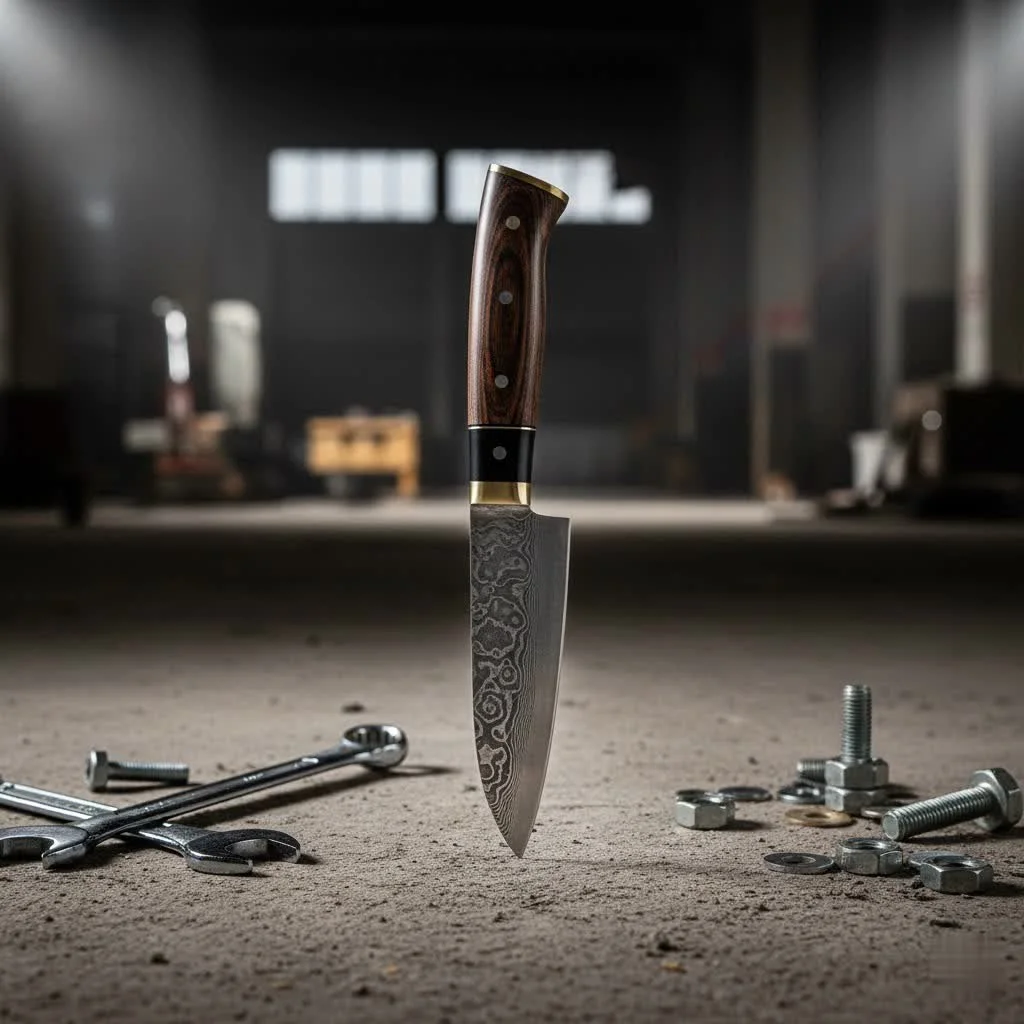
What Exactly is a Kitchen Chopper Knife?
At its heart, a kitchen chopper knife is a broad-bladed knife, most commonly recognized in its “Chinese chopper” form, though variations exist across many culinary traditions. Unlike the brute force implied by its name, this knife is meticulously crafted for versatility and control in everyday kitchen tasks. It’s the kind of knife that makes quick work of large piles of vegetables and handles boneless proteins with ease, becoming an extension of your hand rather than a cumbersome tool.
It’s crucial to understand that a true kitchen chopper knife is not the same as a heavy-duty cleaver. While both share a distinctive rectangular or broad-bladed profile, their purpose and design philosophies diverge significantly.
“Many mistake the kitchen chopper for a heavy-duty cleaver, but its lighter, thinner blade is designed for finesse, not brute force.” – Chef Anya Petrova, Awilu Kitchen Knife Expert
Chopper Knife vs. Cleaver: Understanding the Core Difference
The similar appearance of a kitchen chopper knife and a traditional meat cleaver can cause considerable confusion, but knowing the distinction is key to using each tool effectively and safely.
The Kitchen Chopper Knife
The kitchen chopper knife, often referred to as a “vegetable cleaver” or “Chinese slicer,” is built for agility and precision.
- Purpose: Primarily used for slicing, dicing, mincing vegetables, fruits, boneless meats, and fish. It excels at tasks requiring delicate cuts and uniform pieces.
- Blade Characteristics: Typically features a thinner blade, often between 2 to 3 millimeters thick. This lighter profile allows for fluid, swift movements and less fatigue during prolonged use. Its sharp, keen edge is designed to glide through ingredients with minimal resistance.
- Tasks: Beyond chopping, its wide, flat surface is perfect for crushing garlic cloves or ginger, and its broad blade is invaluable for scooping prepped ingredients directly into a pot or pan.
|
Our Picks for the Best Kitchen Knife in 2026
As an Amazon Associate I earn from qualifying purchases.
|
||
| Num | Product | Action |
|---|---|---|
| 1 | Mercer Culinary BPX Chef\'s Knife, 6-Inch |

|
| 2 | Farberware Edgekeeper 7-Inch Santoku Knife with Self-Sharpening Blade Cover, High Carbon-Stainless Steel Kitchen Knife with Ergonomic Handle, Razor-Sharp Knife, Black |
|
| 3 | Shun Classic Blonde 6\" Chef\'s Knife, Handcrafted Japanese Kitchen Knife for Professional and Home Chefs, VG-MAX Core with Damascus Stainless Steel Cladding, Pakkawood Handle |
|
| 4 | Rynal Ceramic Knife - 8 inch Chef\'s Knife - Light, Precise, Sharp Ceramic Kitchen Knife with Sheath Cover |
|
| 5 | Tramontina Chef\'s Knife, Plenus, 7 Inches, Black, Dishwasher Safe, Ultra Lightweight, Made in Brazil, 23426/107 TRAMONTINA |
|
| 6 | WÜSTHOF Classic 5\" Utility Knife, Black, Stainless Steel |
|
| 7 | HENCKELS Modernist Razor-Sharp 8-inch Carving Knife, German Engineered Informed by 100+ Years of Mastery, Gray |
|
| 8 | Shun Cutlery Premier Chef\'s Knife 8”, Thin, Light Kitchen Knife, Ideal for All-Around Food Preparation, Authentic, Handcrafted Japanese Knife, Professional Chef Knife |
|
| 9 | HAUSHOF Steak Knives Set of 4, Sharp Serrated Steak Knives, Premium Stainless Steel Steak Knife Set with Gift Box, Black Handle |
|
| 10 | Cuisinart, Classic® ColorCore® Collection, C77CR-10PW |
|
The Heavy-Duty Cleaver Knife
In contrast, the heavy-duty cleaver is built for power and breaking down tougher ingredients.
- Purpose: Designed for robust tasks like chopping through bones, separating tough joints, and preparing large cuts of meat.
- Blade Characteristics: Possesses a much thicker, heavier blade, usually 4 millimeters or more, providing the necessary heft to withstand impact without damage. Its robust construction prioritizes durability over delicate slicing.
- Tasks: Ideal for butchering poultry, sectioning ribs, or hacking through dense root vegetables, where sheer force is required.
In essence, while both knives share a similar silhouette, the kitchen chopper knife is your ally for intricate preparation, whereas the cleaver is reserved for tasks demanding significant power.
Unleashing the Versatility: What Your Chopper Knife Can Do
Once you grasp its true design, you’ll find the kitchen chopper knife to be one of the most versatile tools in your arsenal. It truly is a multi-tasking marvel that can transform your meal preparation.
Slicing and Dicing Vegetables with Ease
From creating matchstick carrots for a stir-fry to perfectly diced onions for a mirepoix, the chopper knife makes quick work of a wide array of vegetables. Its broad, flat blade provides stability and a generous surface for guiding your cuts.
How do you slice vegetables with a kitchen chopper knife?To slice, hold the chopper with a firm yet relaxed grip, allowing its weight to do most of the work. Use a swift, downward motion with minimal force, letting the sharp edge glide through the ingredient. For dicing, first slice the vegetable into flat pieces, then stack them before cutting into strips, and finally dice into smaller, uniform pieces. The wide blade is also incredibly useful for scooping up and transferring your prepped ingredients directly into your cooking vessel, saving time and mess.
Preparing Meats and Fish (Boneless)
Don’t let its name limit your perception; this knife is fantastic for protein prep too. It effortlessly slices through boneless chicken breasts, trims cuts of beef, and portions fish fillets with precision. The thin blade prevents tearing and helps maintain the integrity of delicate proteins.
Mincing Garlic and Herbs
For finer tasks like mincing garlic, ginger, or fresh herbs, the front part of the chopper’s blade shines. Its subtle curve allows for a natural rocking motion, quickly reducing ingredients to a fine mince, releasing their full aroma and flavor.
Crushing and Transferring Ingredients
The wide, flat side of your kitchen chopper knife isn’t just for show. It’s an excellent tool for crushing ingredients like garlic cloves or lemongrass. Simply place the ingredient under the blade and apply firm pressure with the heel of your hand. After cutting, its ample surface area doubles as a scraper, making it incredibly efficient for gathering and moving ingredients from your cutting board.
Choosing Your Perfect Kitchen Chopper Knife: A Buyer’s Guide
Selecting the right kitchen chopper knife is an investment in your culinary journey. With so many options available, knowing what to look for can make all the difference in finding a tool that truly elevates your cooking.
Blade Material Matters
The material of your blade dictates its performance, durability, and maintenance requirements.
- High-Carbon Stainless Steel: This is the most popular choice, offering an excellent balance of sharpness, durability, and resistance to corrosion and staining. It’s relatively easy to maintain and holds a good edge.
- Plain Carbon Steel: Renowned for its ability to take and hold a razor-sharp edge, carbon steel offers superior cutting performance. However, it requires more diligent care to prevent rust and can develop a patina over time.
- Ceramic: Extremely hard and sharp, ceramic blades are lightweight and won’t rust. Their brittleness, however, makes them prone to chipping or breaking if dropped or used on hard surfaces.
Blade Thickness and Shape
As discussed, the thickness is key to the chopper’s functionality. For a versatile kitchen chopper knife, a blade thickness of about 2 to 3 millimeters offers the best balance between strength for chopping and finesse for slicing. Wider blades are generally preferred for vegetable prep, as they provide more surface area for scooping and a comfortable knuckle clearance.
Handle and Balance: The Feel in Your Hand
The comfort and balance of a knife are paramount for safe and efficient use.
- Ergonomics: Look for an ergonomic handle design that fits comfortably in your hand, providing a secure, non-slip grip. This reduces fatigue during long prep sessions and prevents accidents. Materials like wood, composite, or textured synthetics each offer different feels and maintenance needs.
- Balance: A well-balanced knife feels like an extension of your arm. The point where the blade meets the handle should feel balanced, or perhaps slightly blade-forward if you prefer a little extra heft for chopping root vegetables. A full tang, where the blade metal extends through the entire handle, significantly enhances durability and balance.
Size and Weight
While a broader blade is characteristic, the overall size and weight should feel right for you. A knife that’s too heavy can cause undue fatigue, while one that’s too light might feel uncontrolled. Aim for a chopper that feels substantial enough for steady cuts but still agile in your hands.
Price and Brand Reputation
Investing in a quality kitchen chopper knife is a long-term decision. Reputable brands often offer superior materials, craftsmanship, and warranties. While budget is always a factor, consider the long-term value of a durable, high-performing knife over cheaper, less reliable alternatives.
Master the Edge: Care and Maintenance for Your Kitchen Chopper
A sharp knife is a safe knife, and proper care will ensure your kitchen chopper knife remains a joy to use for years to come.
Cleaning Protocol
Always wash your chopper knife by hand immediately after use with warm, soapy water. Avoid dishwashers, as harsh detergents and high temperatures can dull the blade and damage the handle. Dry it thoroughly with a soft cloth to prevent water spots and rust, especially if it’s a high-carbon steel blade.
Sharpening Techniques
Regular maintenance is vital for maintaining a keen edge.
- Honing Rod: Use a honing rod weekly, or even daily with heavy use, to realign the blade’s edge. This doesn’t sharpen the knife but straightens microscopic curls in the edge, restoring its cutting performance. Hold the blade at a consistent angle (typically around 15-20 degrees) and draw it along the rod in smooth, even strokes.
- Whetstone Sharpening: For true sharpening, a whetstone is the ideal tool. Start with a coarser grit stone to remove any nicks or restore a dull edge, then progress to a finer grit to achieve a razor-sharp finish. Soak the stone in water as directed, maintain a consistent angle, and apply even pressure as you glide the blade across the stone. With proper care, your kitchen chopper will maintain its sharpness, making kitchen prep work easier and more efficient.
Safe Storage
Proper storage protects both your knife and your hands. Knife blocks, magnetic strips, or individual blade guards are excellent options. If your chopper has a hole (more common in some cleavers, but occasionally seen in choppers too), it can be a practical way to hang it, especially if it’s too large for a standard knife block.
Common Questions About Kitchen Chopper Knives
Many budding chefs and seasoned home cooks have questions about this unique kitchen tool. Here are some of the most frequently asked:
Q: Can a kitchen chopper knife cut through bones?A: No, kitchen chopper knives are designed for vegetables, boneless meats, and fish. For cutting through bones, a heavy-duty cleaver is required due to its significantly thicker and heavier blade, built for impact.
Q: What’s the ideal blade length for a kitchen chopper?A: While general-purpose choppers vary, a common range for a versatile kitchen chopper knife is often around 7-9 inches (18-23 cm). This size offers a good balance of maneuverability and cutting power for most kitchen tasks without being overly cumbersome.
Q: How often should I sharpen my chopper knife?A: For regular cooks, honing your knife weekly is highly recommended to maintain its edge. Sharpening with a whetstone every few months, or as soon as you notice a significant decline in performance, is a good general practice. The frequency ultimately depends on your usage and the blade’s material.
Q: Is a heavier chopper knife always better?A: Not necessarily. While some weight provides stability and aids in chopping, an overly heavy knife can lead to hand fatigue and reduce control, making precise tasks more difficult. The best kitchen chopper knife feels balanced and comfortable in your hand, allowing for controlled and accurate movements.
Q: Can I use the flat side of my chopper knife to smash ingredients?A: Absolutely! The wide, flat side of a kitchen chopper knife is excellent for crushing garlic cloves, ginger, and other aromatic ingredients. It’s also incredibly useful for scooping chopped food off your cutting board and directly into your pot or pan.
The Awilu Edge: Empowering Your Culinary Journey
The kitchen chopper knife, when understood and utilized correctly, is an incredibly powerful and efficient tool that can truly elevate your cooking experience. It’s a testament to how the right instrument, in the right hands, can transform mundane prep work into an almost meditative process.
At Awilu.com, we are passionate about helping you discover and master such essential tools. Embrace the precision, appreciate the versatility, and commit to the care of your kitchen chopper knife. It will reward you with years of effortless food preparation and a deeper connection to your culinary art. We invite you to explore more insights and expert guides on Awilu.com, where we believe every slice, chop, and dice should be a step towards perfection. Share your chopper knife experiences with us, and let’s keep the art of knife craftsmanship alive and thriving in every kitchen.
Frequently Asked Questions
Can a kitchen chopper knife be used to cut through bones?
No, kitchen chopper knives are specifically designed for vegetables, boneless meats, and fish. For tasks involving cutting through bones, a heavy-duty cleaver is required due to its significantly thicker and heavier blade, which is built to withstand impact.
What is the ideal blade length for a versatile kitchen chopper knife?
For a versatile kitchen chopper knife, a common and effective blade length typically ranges from 7 to 9 inches (18-23 cm). This size provides an optimal balance of maneuverability for precise cuts and sufficient cutting power for most kitchen tasks without being cumbersome.
How frequently should I sharpen my kitchen chopper knife for optimal performance?
For regular cooks, it is highly recommended to hone your kitchen chopper knife weekly to maintain its edge. True sharpening with a whetstone should be done every few months, or as soon as you notice a significant decline in its cutting performance, depending on usage and blade material.
Is a heavier kitchen chopper knife always superior for kitchen tasks?
Not necessarily. While some weight contributes to stability and aids in chopping, an excessively heavy knife can lead to hand fatigue and reduce control, making precise tasks more challenging. The best kitchen chopper knife feels balanced and comfortable in your hand, allowing for controlled and accurate movements.
Can the flat side of a kitchen chopper knife be used to smash ingredients?
Absolutely. The wide, flat side of a kitchen chopper knife is an excellent tool for crushing ingredients such as garlic cloves, ginger, and other aromatics. It also serves as an incredibly efficient scraper for gathering and transferring chopped food from your cutting board directly into a pot or pan.
How to Slice Vegetables with a Kitchen Chopper Knife
Learn the proper technique to slice and dice vegetables efficiently using a kitchen chopper knife, including how to hold the knife and use its broad blade for scooping.
Hold the kitchen chopper knife with a firm yet relaxed grip. Allow the knife's weight to assist in the cutting process, minimizing the force you need to apply.
Use a swift, downward motion, letting the sharp edge glide through the ingredient with minimal resistance. For dicing, first slice the vegetable into flat pieces.
Stack the sliced vegetable pieces before cutting them into strips, then dice them into smaller, uniform pieces. Utilize the wide blade to scoop up and transfer your prepped ingredients directly into your cooking vessel, which saves time and reduces mess.
As a professional, I appreciate the distinction made between a chopper and a heavier cleaver. I’ve seen too many home cooks misuse their tools. The thinner blade, around 2-3 millimeters, is perfect for agile movements and really helps with mincing herbs finely. It’s a solid recommendation for anyone serious about their kitchen work.
This knife is an absolute workhorse! I was tired of switching between different knives for fruits and vegetables. The kitchen chopper knife handles everything from apples to potatoes with such ease. It’s definitely become my go-to for daily kitchen tasks and has made cooking much more enjoyable.
I picked up a Chinese chopper style knife after reading about its versatility for boneless meats. While it’s great for dicing chicken, I found the broad blade a bit unwieldy at first. It took some getting used to, and I still prefer a smaller utility knife for very small tasks. Good for big jobs though.
I’ve always struggled with getting uniform slices, especially with larger vegetables. This guide really highlighted the precision slicing aspect of a kitchen chopper knife, and it’s been a game-changer for my meal prep. My carrots and onions have never looked so professional! It truly makes quick work of big piles of veggies.