The 8-inch chef’s knife is the ultimate all-purpose kitchen knife for most home cooks, offering exceptional versatility for chopping, slicing, dicing, and mincing a wide range of ingredients. This single, dependable blade simplifies food preparation, enhances efficiency, and provides precision for nearly any culinary challenge, making it a foundational tool in any kitchen.
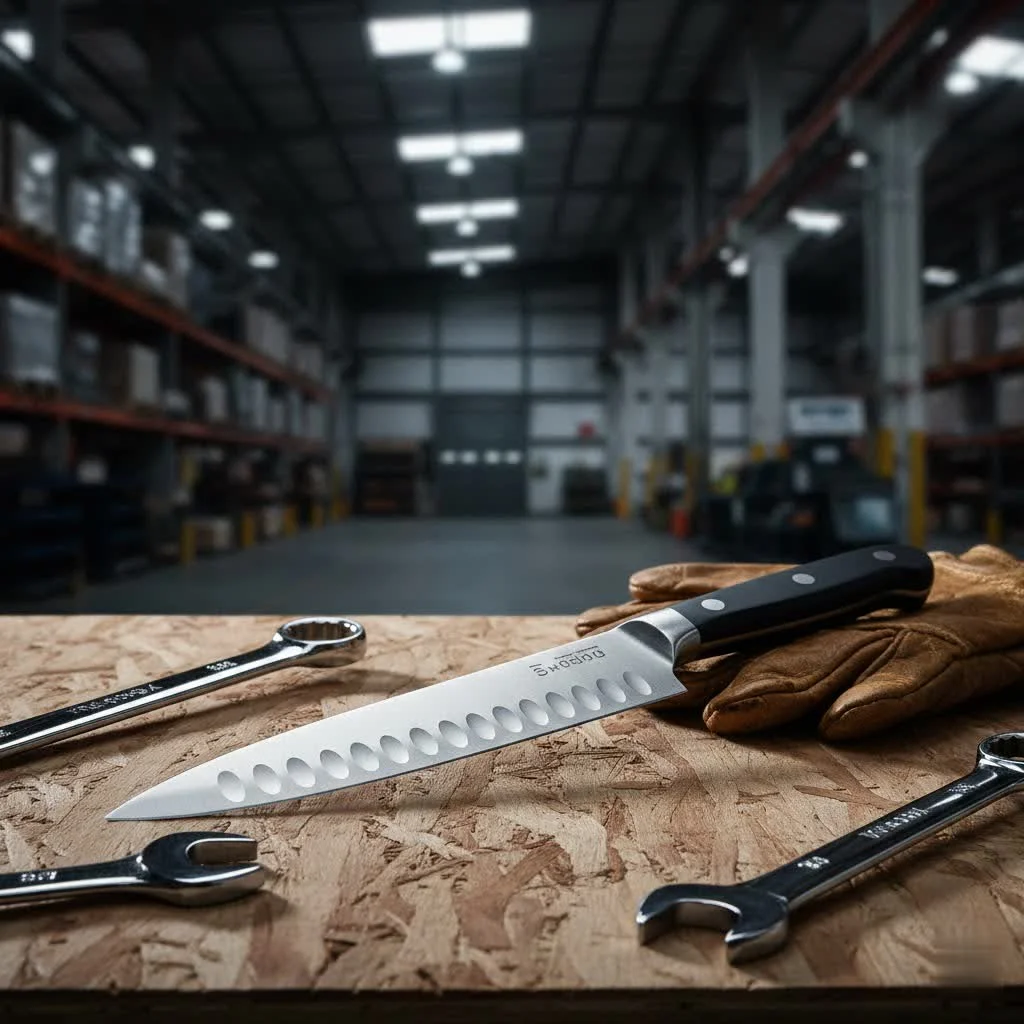
At its core, an all-purpose kitchen knife is designed for remarkable versatility. It’s the blade you reach for most often, capable of everything from finely mincing garlic to robustly chopping vegetables or expertly slicing meats. It’s the workhorse that makes your culinary journey smoother and more enjoyable, simplifying your toolset and empowering you to cook with confidence. For see our kitchen knives recommendations on this site.
What Exactly Makes a Knife “All-Purpose”?
The true magic of an all-purpose knife lies in its ability to handle a vast array of tasks without specialized features. Unlike a delicate filleting knife or a heavy-duty cleaver, an all-purpose blade strikes a balance in its design to perform diverse functions. Think about preparing a complex meal: you might need to dice onions, chop carrots, slice chicken breasts, and mince fresh herbs. A quality all-purpose knife can execute all these tasks with ease, preventing the constant swapping of tools and streamlining your workflow.
For the home cook, this versatility is invaluable. It means less money spent on knives that sit idle and more focus on mastering fundamental cutting techniques with a single, reliable instrument. It’s truly the foundation of an efficient and enjoyable kitchen.
The Reigning Champions: Chef’s Knife vs. Santoku
When we talk about all-purpose kitchen knives, two iconic styles immediately come to mind: the Western-style chef’s knife and the Japanese Santoku. While both excel at general kitchen tasks, they offer distinct experiences shaped by their cultural heritage and design philosophies.
The Western Workhorse: The Chef’s Knife
The chef’s knife is arguably the most recognizable all-purpose knife in Western kitchens, and for good reason. Its design is a shows functional elegance, built for power and versatility.
- Blade Shape: Characterized by its broad blade that curves upward to a pointed tip. This distinct curve is central to its most common cutting technique.
- Typical Size: Chef’s knives usually range from 6 to 14 inches, with the 8-inch blade being the most popular choice for home cooks due to its balanced length and control.
- Cutting Technique: The curved blade allows for a “rocking motion,” where the tip remains in contact with the cutting board while the heel moves up and down. This technique is superb for rapidly mincing herbs, crushing garlic, and efficient chopping.
- Best For: Chopping various vegetables, dicing onions, mincing herbs, slicing meats and poultry, and even disjointing some smaller cuts of meat. Its robust nature also makes it suitable for tasks like smashing garlic cloves.
- Materials and Durability: Western chef’s knives often feature thicker blades made from softer, yet durable, high-carbon stainless steel. This steel offers a good balance of sharpness and resistance to chipping, making them resilient to everyday kitchen demands.
The Japanese Precision Tool: The Santoku
|
Our Picks for the Best Kitchen Knife in 2026
As an Amazon Associate I earn from qualifying purchases.
|
||
| Num | Product | Action |
|---|---|---|
| 1 | Tramontina Chef\'s Knife, Plenus, 7 Inches, Black, Dishwasher Safe, Ultra Lightweight, Made in Brazil, 23426/107 TRAMONTINA |

|
| 2 | Shun Classic Blonde 6\" Chef\'s Knife, Handcrafted Japanese Kitchen Knife for Professional and Home Chefs, VG-MAX Core with Damascus Stainless Steel Cladding, Pakkawood Handle |
|
| 3 | HAUSHOF Steak Knives Set of 4, Sharp Serrated Steak Knives, Premium Stainless Steel Steak Knife Set with Gift Box, Black Handle |
|
| 4 | Cuisinart, Classic® ColorCore® Collection, C77CR-10PW |
|
| 5 | Mercer Culinary BPX Chef\'s Knife, 6-Inch |
|
| 6 | HENCKELS Modernist Razor-Sharp 8-inch Carving Knife, German Engineered Informed by 100+ Years of Mastery, Gray |
|
| 7 | Rynal Ceramic Knife - 8 inch Chef\'s Knife - Light, Precise, Sharp Ceramic Kitchen Knife with Sheath Cover |
|
| 8 | Farberware Edgekeeper 7-Inch Santoku Knife with Self-Sharpening Blade Cover, High Carbon-Stainless Steel Kitchen Knife with Ergonomic Handle, Razor-Sharp Knife, Black |
|
| 9 | Shun Cutlery Premier Chef\'s Knife 8”, Thin, Light Kitchen Knife, Ideal for All-Around Food Preparation, Authentic, Handcrafted Japanese Knife, Professional Chef Knife |
|
| 10 | WÜSTHOF Classic 5\" Utility Knife, Black, Stainless Steel |
|
Hailing from Japan, the Santoku is a formidable contender for the title of all-purpose knife, offering a different approach to precision and control. Its name, “Santoku Bōchō,” translates to “three virtues” or “three uses,” referring to its ability to expertly cut meat, fish, and vegetables.
- Blade Shape: The Santoku typically features a straighter edge than a chef’s knife, with a “sheep’s foot” or “drop point” tip where the spine gently curves down to meet the edge. Many Santokus also feature a Granton edge – those distinctive hollow divots along the blade – which helps prevent food from sticking.
- Typical Size: Santoku knives are generally shorter and lighter than chef’s knives, often measuring between 5 and 7 inches. This shorter length can offer more control, especially for less experienced cooks.
- Cutting Technique: Due to its flatter profile, the Santoku is best suited for an up-and-down “push cut” motion, where the entire blade is used to slice straight down through ingredients. It also excels at a “vertical chop” where the knife is lifted and brought straight down.
- Best For: Precision slicing, dicing, and mincing, particularly favored for vegetables, boneless fish, and thinner cuts of meat. Its design makes it exceptional for tasks requiring fine, uniform cuts, such as julienning vegetables.
- Materials and Sharpness: Santokus are often crafted from harder, thinner steel, which allows them to achieve and maintain an incredibly sharp edge. While this hardness can make them slightly more prone to chipping than a Western chef’s knife, it delivers unparalleled cutting performance.
Choosing Your Champion: Which is Right for You?
The choice between a chef’s knife and a Santoku largely boils down to personal preference, your primary cutting style, and the types of food you prepare most often.
If you prefer a fluid “rocking” motion for chopping and mincing, and often handle larger cuts of meat or dense vegetables, the chef’s knife is likely your ideal match. Its weight and curved blade provide momentum and power.
If precision, an up-and-down cutting style, and delicate slicing of vegetables and boneless proteins are more your speed, the Santoku might feel more natural and efficient in your hand. Its shorter length and lighter weight often appeal to those who seek greater control.
It’s also the utility knife as a smaller, versatile option that sits between a paring knife and a chef’s knife, typically 4-7 inches long. It’s perfect for when your primary all-purpose knife feels a bit too large for smaller tasks.
As Awilu’s Chief Knife Enthusiast, I’ve seen countless cooks find their rhythm with both styles. As my colleague, Master Bladesmith Hiroshi Tanaka, often says, “The best knife is the one that feels like an extension of your hand.”
Beyond the Blade: Key Features of a Great All-Purpose Knife
While blade style is crucial, the quality of an all-purpose kitchen knife extends to several other vital features that influence its performance, durability, and your comfort.
- Blade Material: High-quality knives are typically made from advanced steels such as high-carbon stainless steel, VG10, or Japanese AUS10. These materials are chosen for their ability to hold a sharp edge, resist corrosion, and withstand the rigors of daily use. A good blade material ensures both sharpness and longevity.
- Hardness (HRC): Measured on the Rockwell hardness scale (HRC), this indicates how well a blade retains its edge. For all-purpose knives, an HRC range of 56 to 62 strikes an ideal balance between sharpness retention and resistance to chipping, offering the best of both worlds.
- Handle Ergonomics: A comfortable and secure handle is paramount. Materials like wood, composite (such as G10), or high-quality polymers provide a firm, non-slip grip, even when wet. An ergonomically designed handle reduces fatigue during long prep sessions and ensures safer handling.
- Balance and Weight: A well-balanced knife feels natural in your hand, making it easier to control and less tiring to use. Some prefer a heavier knife for more power, while others opt for a lighter blade for agility and precision. Test different options to find what suits your personal preference.
Sharpening and Caring for Your All-Purpose Knife
Even the best all-purpose knife needs proper care to maintain its peak performance. Neglecting your blade can quickly turn a culinary joy into a frustrating chore.
- Hand Washing is Crucial: Always hand wash your knife immediately after use with warm, soapy water and dry it thoroughly. Dishwashers can be harsh on knife blades and handles, leading to dulling, corrosion, and damage over time.
- Regular Honing: Honing realigns the microscopic edge of your blade, keeping it sharp between full sharpenings. A honing steel should be used frequently, ideally before or after every use, to maintain the edge.
- Occasional Sharpening: When honing no longer brings back the desired sharpness, it’s time for a proper sharpening using whetstones, pull-through sharpeners, or professional services. The frequency depends on your usage, but generally, a home cook might sharpen their all-purpose knife a few times a year.
- Safe Storage: Store your knife safely in a knife block, on a magnetic strip, or with a blade guard to protect the edge from dulling and prevent accidental injury.
Top Brands for All-Purpose Kitchen Knives
The market is rich with excellent brands offering high-quality all-purpose knives. Reputable Western brands like Victorinox and Wüsthof are renowned for their durable, performance-driven chef’s knives. For those leaning towards Japanese precision, brands like Tojiro, Shun, and MAC offer exceptional Santokus and chef’s knife alternatives crafted with advanced blade technologies. Mercer Culinary and Misen also provide fantastic value and quality for home cooks.
Unlock Your Culinary Potential
An all-purpose kitchen knife isn’t just a tool; it’s an investment in your culinary journey. Choosing the right one—be it a classic chef’s knife or a precise Santoku—and committing to its proper care will dramatically improve your cooking experience. It empowers you to approach food preparation with confidence, efficiency, and a touch of professional flair. So, take the plunge, find your perfect blade, and unlock the full potential of your kitchen. Your taste buds, and your knife, will thank you.
Frequently Asked Questions
What is the most versatile kitchen knife for home cooks?
The 8-inch chef's knife is generally considered the most versatile kitchen knife for home cooks due to its balanced size and curved blade, which allows for a wide range of cutting techniques. The Santoku knife is a close second, offering excellent versatility with a focus on precision cuts.
Is an 8-inch chef's knife suitable for all kitchen tasks?
Yes, an 8-inch chef's knife is widely regarded as an ultimate all-purpose tool for most home cooks. Its length provides ample cutting surface for larger items, while remaining manageable for smaller tasks, making it ideal for chopping, slicing, dicing, and mincing.
Can a Santoku knife be used for every type of food preparation?
A Santoku knife is highly versatile and can handle most kitchen tasks, especially slicing vegetables, fish, and boneless meats with precision. However, its flatter blade and shorter length may make it less ideal than a chef's knife for tasks requiring a strong rocking motion or cutting through very dense, large items.
How often should a home cook sharpen their all-purpose knife?
For a home cook, a full sharpening is typically needed a few times a year, depending on usage. However, frequent honing (ideally before or after each use) is essential to maintain the blade's edge between sharpenings.
What is the key difference between honing and sharpening a knife?
Honing realigns the microscopic edge of a knife blade that has bent over through use, restoring its keenness without removing material. Sharpening, on the other hand, actually removes a small amount of steel from the blade to create a new, sharper edge. Honing is maintenance, while sharpening is restoration.
Caring for Your All-Purpose Kitchen Knife
Proper care is essential to maintain the peak performance and longevity of your all-purpose kitchen knife. Follow these steps to keep your blade sharp and in excellent condition.
Always hand wash your knife with warm, soapy water immediately after each use. Thoroughly dry it to prevent water spots and corrosion. Avoid dishwashers, as they can dull blades and damage handles.
Use a honing steel frequently, ideally before or after every use, to realign the microscopic edge of your blade. This maintains sharpness between full sharpenings and extends the life of the edge.
When honing no longer restores the desired sharpness, it's time for a proper sharpening. This can be done using whetstones, pull-through sharpeners, or professional services, typically a few times a year for home cooks.
Store your knife safely in a knife block, on a magnetic strip, or with a blade guard. This protects the sharp edge from dulling and prevents accidental injuries in the kitchen.
Cooking gear we tested in our own kitchens
Free PDF — preheat times measured on 10 popular air fryers.

I got an 8-inch chef’s knife hoping it would be my go-to for everything. While it’s great for dicing and general prep, I found it a bit too long for really precise tasks like peeling smaller fruits. It’s good, but not quite the ‘one knife to rule them all’ for my specific needs.
This knife has been a game-changer for my home cooking. The versatility for slicing meats and mincing garlic is fantastic. My only minor complaint is that the handle feels a little slick when my hands are wet, but it’s nothing a good grip can’t fix. Still, a solid purchase.
I finally invested in a good 8-inch chef’s knife after years of struggling with dull, mismatched blades. What a difference! Chopping vegetables is so much faster and safer now. It really is the workhorse everyone talks about, and I find myself reaching for it for almost everything.
I was skeptical about needing just one knife for everything, but the description of an all-purpose knife being able to handle robust chopping and delicate tasks really sold me. It’s incredibly efficient and has simplified my kitchen drawer significantly. No more searching for the ‘right’ knife!